
Floating Oil Booms
Floating oil booms are specialised containment barriers designed to control, contain, and isolate oil and fuel spills on water. Their high‑float design prevents hydrocarbons from entering stormwater systems, ponds, harbours, and marine environments.
What Floating Oil Booms Are Used For:
Containing oil and fuel spills on water
Protecting stormwater drains, ponds, and waterways
Creating temporary barriers around boats, marinas, and slipways
Isolating spills during fuel transfers and refuelling
Capturing hydrocarbon leaks near water
Emergency response in harbours, lakes, and retention ponds
How Floating Oil Booms Work:
A buoyant top section that keeps the boom afloat
Hydrophobic absorbent material that attracts and absorbs hydrocarbons
Interlocking clips that allow multiple booms to be joined and create a longer containment area
They are the first line of defense in nearly every oil spill response
Specifications:
Material: Hydrophobic polypropylene
Length: 3mtr sections
Diameter: 12.7cm x 3mtr and 20cm x 3mtr
Connection: Clip‑together linking system
Colour: White (oil‑only)
Compliance Note:
Supports HSWA and EPA requirements for containing oil spills on water and protecting stormwater systems..
See the Environmental Responsibilities when on the water:
https://www.maritimenz.govt.nz/recreational-craft/on-the-water/environmental-responsibilities/
Floating Oil Booms
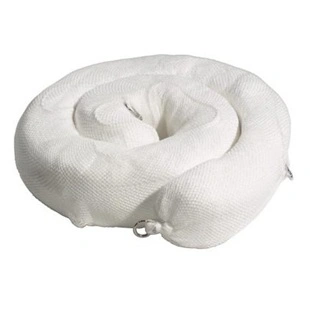
Floating Oil Boom 12.7cmx3mtr SKU: CBOO05Q
Specification: Can absorb up to 32L
Floating Oil Booms
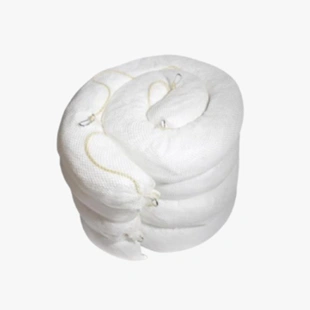
Floating Oil Boom 20cmx3mtr SKU: CBOO08Q
Specification: Can absorb up to 72L
Frequently Asked Questions:
Do floating booms absorb water?
No — they are hydrophobic and absorb only hydrocarbons.
Can floating booms be linked together?
Yes — booms include clips so multiple sections can be joined together and should ideally overlap approximately 30cm for larger areas.
How long can a boom stay in the water?
Until saturated or visibly contaminated. For long‑term deployment, non‑absorbent containment booms are recommended.
Do floating booms work in moving water?
Yes — but performance depends on current speed. They are ideal for ponds, marinas, and slow‑moving water.
How should used booms be disposed of?
Dispose of as oily waste according to local regulations and SDS guidance.
Related Spill Response Categories:
• Oil/Hydrocarbon Spill Kits — Kits designed for fuels, oils and hydrocarbons
• Absorbent Products — Pads, socks, pillows, rolls, booms and particulate absorbents
• PPE for Spill Response — Gloves, safety glasses/goggles, disposable aprons and coveralls and respiratory protection
•Drain Protection — Drain mats, drain guards, and drain protectors
• Secondary Containment — Spill decks, bunds, trays, spill pallets, drum containment and IBC solutions
• DG Storage Cabinets — Approved storage for flammable liquids, toxics, corrosives, oxidisers
• Eyewash Solutions — Saline and buffer solutions for emergency eye flushing
• Site Safety & Signage — Warning signs, DG labels, cones and retractable bars
• Product Accessories — Clinical wipes, Spill kit bin lid covers, caution tape and more