Absorbent Pads — Technical Information
This resource page provides deeper technical information about absorbent pads, expanding on the core details found on the main product page. It explains how pads behave in real spill‑response situations, the types of liquids they are suited for, and practical considerations for selecting, deploying, and disposing of them in NZ workplaces.
These notes support supervisors, and health & safety managers by offering a clearer understanding of pad performance, durability, and best‑practice usage across workshops, factories, warehouses, transport depots, and service areas. Use this page when preparing for spill‑response, or choosing absorbents for day‑to‑day operations and emergency spill kits.
Absorbent Pad Usage
• Absorbent pads are designed for fast, surface‑level control of spills involving oils, fuels, coolants, lubricants, water‑based liquids, and many common workshop chemicals. Their flat profile allows responders to quickly place pads directly over the spill source, wipe down affected surfaces, or create a temporary barrier to stop liquid from spreading across floors, benches, or equipment.
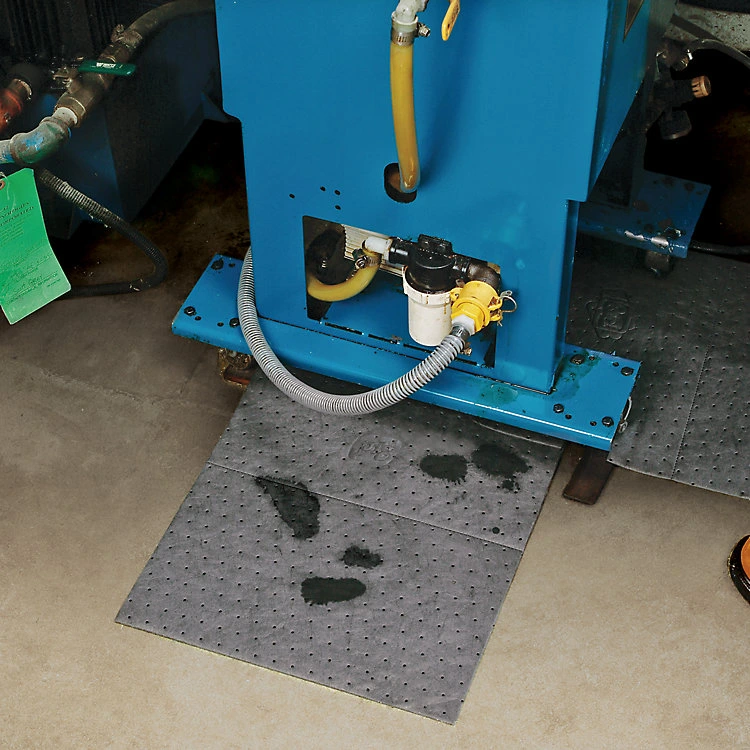
• Pads are commonly used for: capturing drips and leaks under machinery or vehicles; wiping down tools, hoses, fittings, and work surfaces during maintenance; placing under decanting points to prevent small spills; absorbing residual liquids after a spill has been contained; lining spill trays, drip pans, and work benches; keeping walkways dry and reducing slip hazards.
• During emergency spill response, pads provide rapid initial control while larger absorbents (such as socks or pillows) are deployed. Their ease of handling makes them ideal for small to medium spills where quick absorption and minimal disruption are essential.
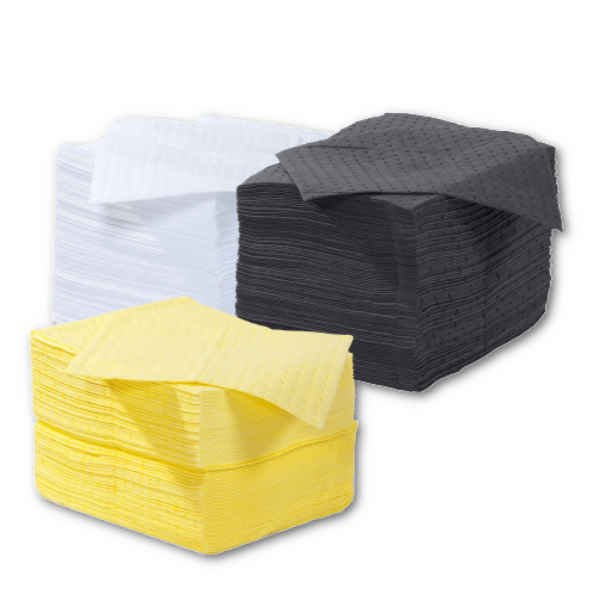
• Pads are also a core component of most NZ spill kits, offering responders a predictable, lightweight absorbent that integrates cleanly with EnviroproNZ’s oil‑only (white), general purpose/universal (grey), and chemical (yellow) absorbent systems.